Ransomware cyber response - Lessons from the trenches

 Ransomware cyber response - Lessons from the trenches

" On a long enough timeline, the survival rate of an organization against a dedicated adversary drops to zero. "

7 years back, around this time, on a long night in the middle of nowhere, I encountered a curious malware sample. Something didn't feel right about it, and thankfully my schedule was wide open.

As I went through the sample, I was able to glean couple of things – it encrypted files, left a backdoor (classic “sethc”) and required manual intervention for execution. It also tried to reach out to a C2 IP (184.107.251.146). Ergo, with some effort – I was able to deduce its tactics and surmise its nature. 

On a long enough timeline, the survival rate of an organization against a dedicated adversary drops to zero.

It was my first brush with “LeChiffre”, a malware that offered “Ransomware as a Service” or RaaS capabilities. I was young then, and could not have comprehended the myriad scale of RaaS industry, that would later unfold in front of my eyes.

Back then, ransomware (or "Scareware", its fore-bearer) used to be a type of an opportunistic software, typically run by a ragtag gang of cyber criminals. Organized criminal gangs were yet to realize the immense potential of RaaS from a financial and operational risk standpoint. Over a period of time, RaaS would evolve into a vast enterprise with functions akin to the heads of a hydra – ransomware gangs, exploit brokers, forum owners, initial access brokers, chat support operators, ransomware developers, infrastructure providers and so on. Law enforcement may slay one head, another one will take it's place and assume dominance.

Now, as I look back, 75 plus "cyber response incidents" wiser – that was the moment that actually defined my strategy towards ransomware incidents in particular. Through this post, I would like to share some key lessons that might help you improve your cyber security posture, and preparedness against a ransomware incident.

Don’t Panic!

Panic is the mother of chaos, and father of discord

Don't panic, because everything is probably all right, and if it's not, panicking will make it worse. ” – Emily Barr

Ransomware incidents have the power to bring an enterprise to a grinding halt. The double, and triple extortion tactics are squarely aimed to impact where it hurts the most – reputation and regulators. However, know this – You are not the first it has happened to, neither you will be the last. However, if you play your cards right, you will become percipient and resilient.

Enterprise wide panic does nothing to solve an ongoing crisis. 

A single source of truth.

The path to truth is not for the faint hearted

Experiment is the sole source of truth. It alone can teach us something new; it alone can give us certainty.” – Henri Poincare

I cannot overstate the importance of log availability and coverage during the course of a ransomware incident. Attackers love to wipe them to impede cyber response and to deter RCA. A centralized log repository acts as a single source of truth from a monitoring, detection and response standpoint.

Ensure your critical assets are correctly configured to send logs to a centralized repository or a SIEM, and they are sending the correct telemetry which can provide early warnings against an impending attack.

Your source of truth is the backbone of your security operations, and preparedness.

Seat-belts first.

Seat-belts, the yard stick of your risk appetite

Superman don't need no seat belt. ” – Muhammad Ali

For the lesser mortals, seat-belts first.

Ensure your environments are configured with “seatbelts first” mindset, it hurts to get hacked later on. I have observed production applications deployed on environments with key security settings disabled – as they were observed to interfere with the application functionality. Instead of fixing the issues with the application behavior via developer or vendor route, the security defenses were disabled in the interest of going live.

This provides good opportunities for an attacker to target vulnerable environments; and to their owners, an opportunity to learn costly lessons later on.

When in doubt, seat-belts first.

You cannot protect what you cannot see.

Underestimate the value of visibility at your own peril

The power of visibility can never be underestimated. ” – Margaret Cho

Countless times, I have observed an internet exposed RDP, for a server configured for “Rob”. Rob was a project admin with administrator privileges, and his server was enabled with an “Any-Any” firewall rule. The server was not integrated with SIEM as it was "test environment" and was not protected by the anti-virus as it interfered with testing. Rob used to access the server through Anydesk or RDP.

Few remember when Rob left the organization, fewer know about that exposed, poorly secured server.

The RCA report will reveal that the attackers knew about that server and leveraged RDP to pivot inside, unobtrusively.

You may laugh now, but I know your deepest fears. Ultimately, you cannot protect what you cannot see.

Shields up!

Armor only protects warriors, the unprepared tend to get slaughtered

Shall we raise our shields, Captain? ” – Pavel Chekov

While C.I.A principles are good for compliance, I would argue environment compartmentalization is a better strategy for all practical reasons. Containerize your applications, test applications on containers before they are deployed on production. Implement segmentation (and micro segmentation), actually enable payload & TLS inspection on firewalls, stop turning secure defaults off.

Backups are a different ball game altogether, ensure they are protected adequately and tested religiously. They are the lynch-pin for a successful recovery operation against a ransomware attack.

Your sysadmin’s machine is probably the most insecure machine in the network, an access to it exposes everything. Leverage PIM or MFA (hardware tokens, authenticator apps) for authentication and escalation of privileges across environment. Implement principles of least privileges and stop having exceptions for special user groups – Security is an onus for everyone.

Funnel the aforementioned telemetry to SIEM and tune it with at least MITRE ATT&CK use cases. Have some trained eyes to action anomalies and make your environment a cold and unwelcome place for adversaries.

Keep your shields up.

Practice, practice and practice!

Uncharted waters demand unrelenting practice

Amateurs practice till they get it right, professionals practice till they cant get it wrong. ” – Anonymous

Offensive exercises such as red teaming may help identify attack avenues that you might have not considered as part of your existing threat model. Cyber drills may identify response paradigms and preparedness of your organization against a cyber attack.

Cyber drills or ransomware simulations may help uncover pain areas can induce panic and reduce operative effectiveness during the course of a ransomware incident – such as miscommunication, stakeholder accountability, regulator reporting & compliance measures, availability of technical owners and vendors, vendor support clauses, communication channels, PR strategy and communication, decision making process etc.

Practice till it becomes second nature.

Epilogue

Never invite an enemy for a dance

The winner of the game is the player who makes the next-to-last mistake. ” – Tartakower

Ransomware, or any other cyber attack for that matter is a perpetual game of cat and mouse. The attackers will keep hunting for the right opportunity, while the defenders face the ever looming "goalkeepers paradox". In the grand scheme of things, reduction of opportunities against an invisible, impending attacker helps protects against known-unknowns, and potentially unknown-unknowns.

Cyber, just like any other discipline, is susceptible to the usual debates on the technicalities of implementation, nuances of operations, verbiage of policy, and stratagems of future. But when the curtain falls in the event of an incident; exeunt omnes – only the principles and lessons learnt remain, forged by experience, decisiveness and preparedness of an organization.

Happy holidays!

Thanks to Dasarath S and Vivek Gupta for proof reading. This was cross posted on my personal blog as well. Added inputs from backup standpoint as rightely pointed out by Vikram Jeet Singh

 This was cross posted on my linkedin blog as well.


How I got myself a capable laptop

It all started with my old (and very hated) HP Pavilion notebook (i5, 12 GB RAM, 500 GB HDD) almost dying on me. I wanted to get a new laptop, the only reason I stuck with HP for so many years was that I got it as a gift and I wanted to squeeze every drop of use I could get from it.

Well, let's get a new one then, and I wrote down what I needed -

Must have

  1. Good, tactile, backlit keyboard
  2. HDMI, not micro HDMI
  3. Screen less than 13 inches
  4. Good battery life

 Should have

  1. i5-i7 would do, AMD Ryzen as well
  2. Should be portable
  3. Easy to open, repair and upgrade
  4. USB 3.0
  5. RAM 8 GB or more
  6. 256 GB SSD or more

 Nice to have

  1. Should support extra battery
  2. SIM card slot
  3. Swivel support
  4. Graphics card
  5. MIL-STD-810G
  6. Fingerprint sensor for easy login

My options were quite limited considering what I needed would be automatically expensive - I was looking at spending at least INR 75000-100000 (USD ~1000-1300) to get a new one. That too a base model. 

I didn't mind buying a used one, if it served my purpose and was in good condition. I reached out to my connects in hardware segment and asked for their advice. 

A used Ferrari is always a Ferrari, a new ALTO will never match it.

Point well noted.

They referred me to leased laptop distributors, which typically have inventories of laptops which are leased to corporate for 2-3 years and then brought back once the contract is over. Since they are used, people are less inclined to buy them, but their configurations are top notch as compared to their retail consumer segment counterparts and they are built to repair. These laptops are then dismantled and their parts flood the after sales market. The distributors are more than happy if their laptops are sold before they are dismantled.

After having friendly chitchat with a lot of distributors, I finally narrowed my options to Lenovo X250 and an HP EliteBook. The keyboards were nice and tactile and the form factor was small. At one of the distributors, from a heap of laptops, I picked 2 and I asked the person if I can open it. He said why not, and he opened it for me. Both were in good condition, sporting 256 GB SSDs, 8 GB RAM, i5 5th gen processors and were costing INR 14000 (~USD 190), a far cry from new ones, but workable configuration. I asked about warranty and after a bit of negotiation, he agreed for a 1-year repair warranty for INR 2500 (~USD 34). Windows 10 pro was provided for free.

I was about to settle it for X250 one (as it had more ports, was smaller and checked almost everything I needed), one of associates waltzed in and said, "we just got a shipment of some new stock". I asked if I could take a look and they pointed me to next door.

From a heap of X260s I picked 3 - one with no battery and i7 6gen, one with an extra 6 cell battery with i5 6gen and one had 1 TB HDD. I asked if I could swap parts, and they said we don’t care, it’s all the same for us.

I took the extra battery and plugged it into i7 one. CPUZ said it had Skylake i7 6600u and Samsung 8 GB built in. It had 256 GB SSD and a working WWAN module (SIM module) as well. Single memory slot (DDR4, 260 pin SODIMM) but was easy to open and clean. After playing it with for 1 hour, post testing all the ports, modules, running some stress tests, and haggling a bit, I went home with a deal at INR 17000 (~USD 230) with 1-year warranty from distributor, Windows 10 pro bundled.

Then I did some research and checked the maximum RAM it supported - 16GB, 2133MHz DDR4, non-parity. Probably, enough for what I do. 2133 MHz is a bit hard to get by, so a better option was to buy 2666 MHz one since it will run automatically at 2133 Mhz. I did some research (read: going through Reddit threads, Lenovo forums) and found that one user was able to successfully upgrade it with 32 GB of RAM (M471A4G43MB1, costs around INR 27000/ ~USD 370 even more expensive than the laptop). Post upgrading to latest BIOS, I decided to take the risk and got myself a cheaper one (ADATA AD4S2666732G19, 32 GB RAM, 2666 MHz, INR 9000/ ~USD 122) from one of the distributors.

Went back home, disabled internal battery from BIOS, unscrewed & pried back cover and disconnected battery cable. Swapped out 8GB one with 32 GB one. Connected battery cable, power cable and was met with POST screen. Assembled everything back again and ran memtest86 and windows memory diagnostics. Everything was squeaky clean :). Hardened everything, installed virtual box, migrated my VMs, installed emulators and voila, my new system is ready.

I have been using X260 since last 6 months as my primary laptop with the following configuration which runs multiple VMs simultaneously, is used for maintaining remote infrastructure, occasional retro gaming/ emulation and occasional writing :  


  1. Tactile backlit keyboard
  2. 6th Gen Intel Core i7-6600U Processor, Turbo Boost 2.0 (3.4GHz)
  3. 32 GB memory (ADATA AD4S2666732G19)
  4. 12.5" HD (1366 x 768) IPS
  5. 256 GB Samsung SSD
  6. 3 Cell internal + 6 cell external battery
  7. SIM card slot (WWAN)
  8. 3 USB 3.0 ports (Superspeed)
  9. 1 HDMI/ 1 Mini DisplayPort
  10. 4-in-1 Card Reader (MMC, SD, SDHC, SDXC)
  11. Intel I219 Gigabit LAN & Dual Band Wireless-AC 8260, with Bluetooth® 4.1
  12. MIL-STD-810G compliant
  13. Weighs around 1.5 KG
  14. Bundled Windows 10 Pro

Total Cost - INR 26000 / ~USD 352

Lessons learnt –

  1. Research, hunt and haggle
  2. Be very specific about your requirements
  3. Technology evolves every day, see what fits your needs on a long-term basis

Assessing a cyber security candidate

I typically assess a senior cyber security candidate across 7 basic domains for a technical interview, before I actually jump into security. Sometimes, a candidate is so good in these domains that asking questions about security becomes an afterthought. A dipstick feedback of fundamentals actually helps me understand where the candidate is coming from and if he can actually leverage his technical skills in real security engagements. Since these domains are exhaustive, assessment of fundamentals will depend on the previous experience a candidate is having. For instance, I would not expect a college grad to know complete ins and outs of active directory but would expect him to know programming, scripting, linux, VM and algorithms. A SOC guy should know network security, pcap analysis, protocols, BPF/ filters, elementary scripting. An experienced pentester is supposed to know almost all of the mentioned domains. At the end of the day, YMMV.

Tools are not going to make you a hacker, always remember what Gray Fox said -
"Only a fool trusts his life to a weapon"
These domains form the bread and butter basics of any good computer security candidate and enable him to understand the cross functional world from the point of an architect, an operations analyst, an incident responder, a developer, a packer mangler or simply as an adviser.

kinda like this. No Wait! Robyn Beck/AFP/Getty Images


Depending upon the feedback of this article, I may share some good to have domains as well.

Nevertheless, here are the domains :
  1. OS Fundamentals / Software - This is a big one, without these, your attack vectors typically fall flat. Windows and Linux are mandatory. Can you setup a working environment for your own security setup from scratch? Comfortable with VMs? Docker? Jailed environments?
  2. Network/ Network Security - Routers, switches, load balancers et al, be it software of hardware. Are the concepts clear? Considering a lot of the hardware is now virtualized/ customized and is being offered as a service by big providers and every now and then an attack/ exploit emerges that leverages misconfigurations in these systems/ services - these things are important. Can you understand a Pcap? Do you understand routing ? If there is one thing studying Phenoelit early on taught me, was to understand network and routing properly. 
  3. Active Directory/ LDAP - I simply can't overstate the importance of AD/ LDAP when it comes to security. Considering how they function as the backbone for enterprise, you are bound to encounter these. Having good fundamentals around these gives you a good headstart when you actually pentest these environments.
  4. Servers/ Web services/ APIs - Servers and web application basics, how they work, are deployed and do you know how to secure them? Fundamentals are important here. You may be able to find a bug in an application, but in case you can't fix the application per se, can you secure or advise correctly about securing the environment itself? How are application headers used? Do you know how to interact with an API? Can you create your own? Do you operate any website/ webservice? How do you scale it?
  5. Programming/ Scripting - Any one programming or scripting language you are comfortable with - python/ ruby/ bash/ powershell et al. Doesn't matter what it is. Can you read code? Can you comprehend patterns? Can you write pseudocode? Do you have fundamental understanding of algorithms?
  6. Hardware - Good to have knowledge of hardware basics, you should be comfortable with atleast setting up platforms like raspberry pi, beaglebone et al. Can you identify pinouts on an unknown board? Can you read technical manuals? What is your portable platform of choice? Can you setup your own VPN environment on a raspberry pi and hook it up with your test laptop?
  7. Architecture/ Tooling - A typical question starts like this : create a full fledged network for 100 people with everything included, LAN, WAN web services, email et al. Now design for 1000 people. Now for 10 K people. Now let's break it systematically - how will you break it? What attack vectors? What if Burpsuite is not available? Can you leverage curl? How can we improve it?

These domains are absolute essentials, platforms and tools may make you a bug hunter, but a knowledge of these will make you a better one.
There you go, if you know these, you already have a healthy background into computer security basics and I wish you best of luck.

This was crossposted at Fruxlabs Team blog.

The Rescure Cyber Threat Intelligence Project - Domain Blacklist Update

We are now publishing consumable list of malicious domains at rescure.me as part of our independent cyber threat intelligence project.

Each node below is an event with its separate attributes (around 2 million) which are co-related in real-time to ensure only offending, malicious domains are listed at the portal. The current domain list size is around 18 thousand (! and growing) which is updated at the frequency of 4 hours at 
https://rescure.me/rescure_domain_blacklist.txt
Rescure Cyber Threat Intelligence Domain Blacklist
Rescure Cyber Threat Intel Domain List Simulation
As always, feedback is appreciated at support@fruxlabs.com

REScure Cyber Threat Intelligence Feed

We are now generating a daily blacklist of malicious IPs via our own threat intel solution. The feed will be generated every 6 hours and is now available at
https://rescure.me
The below snapshot is the end result of the penultimate stage of co-relation of millions of data points that are finally grouped into attack groups before they are published at rescure.me
Cyber Threat Intelligence co-relation rescure.fruxlabs.com
Co-Relation snapshot at REScure Feed
You are encouraged to try it and consume it into your security solutions. Since this is in beta, we are limiting it to only IPs.
REScure Cyber Threat Intelligence Feed
Yep, REScure may look like this to your SIEM
We are alpha testing API access, detailed Indicators of Compromise access, STIX/TAXII/OpenIOC exports, realtime refresh rates and a lot more. This is an independent project we undertook to enhance our understanding of underlying architecture of distributed systems, the nature of threat intelligence and how to efficiently collect/store/consume/distribute it.

The project is being jointly developed with Sreyash and Eshan.

Your feedback is appreciated, please share it at support@fruxlabs.com.

How I turned my phone into a hacking machine

There are probably hundreds (if not thousands) of tutorials on this, but since I wanted a portable, non rooted, disposable hacking device which has the ability to take calls (a.k.a a cellphone/smartphone), I decided to mod an android based device. I have done this earlier (probably 5 years back) by installing arch on my android phone on a separate partition and booting it. This can be done today as well but since I do not want to root my cellphone, and do not want to use proot/LibSDL, I decided to see what can be done in a non rooted environment.

Intended audience for this piece - anyone having a bit hands experience on linux. Consider this as my personal cliffnotes in case I have to do it again. Let me even include an age old Disclaimer (taken from XDA aeons ago):
I am not responsible for bricked devices, dead SD cards, thermonuclear war, or you getting fired because the alarm app failed. Please do some research before running commands. YOU are choosing to make these modifications, and if you point your finger at me for messing up your device, I will laugh at you.
My iPhone recently went kaput during a fated trip to Jubail, KSA, and I zeroed on an inexpensive, capable device (Motorola G4 Play for around ~120 USD) for which I won't feel bad in case it gets lost or breaks into a million pieces.

Well, the device specs are average, the phone feels rugged and the battery can be taken out by simply removing the cover (which is EXTREMELY important for me). It comes with Android 6.0 and probably will never get updated to Android 7.0 (owing to Lenovo's shitty firmware update cadence), but once I disabled a lot of applications, the phone feels quick and is a joy to use.

First things first -
Disabled : Chrome, Cloud Print, Device Help, Drive, File Manager, FM Radio, Google Japanese/Korean/Pinyin/Zhuyin Input, Google Play Movies, Google Play Music, Google Hangouts, Messenger, Photos, other motorola bloatware.

Doublecheck device administrators. I would have removed a lot more software but then, I will also be using this phone for making calls and for light personal use as well.

Installed : Firefox (with Ublock), ESFile Explorer, Termux, Hacker's Keyboard, Textra (for SMS), Quickpic, OpenVPN, SMS Backup+, FastHub (or Github), Fing (quick GUI based network discovery), Flud (Torrents), Google Authenticator, AndFTP, drozer agent, Packet Capture (Application specific packet capture), TOR and Phonograph (lightweight music application).

Once the device's innards are replaced with a bit more capable/lightweight software, I launched Termux which is probably the most important terminal emulator written for android. From its website
"Termux is an Android terminal emulator and Linux environment app that works directly with no rooting or setup required. A minimal base system is installed automatically; Additional packages are available using the APT package manager. "
Onwards we go.
  • I started by updating Termux and its inherent environment - apt update && apt upgrade
  • Installed python2, python3, nmap, openssh, git, python-pip,htop through relevant apt commands.
  • Installed metasploit through https://github.com/Auxilus/Auxilus.github.io/blob/master/metasploit.sh (turns out this script has been stolen by a lot of folks, like this guy over here, and this one for youtube likes).
  • Installed scapy.
  • Generated OpenSSH keys, configured OpenSSH to run into server mode so that I can login into my cellphone if required. Make sure you check the username with whoami before generating keys. Putty aficionados may want to convert id_rsa keys using puttygen before loading it.

  • Configured OpenVPN application to connect to my remote server. Added TOR support.
  • Authenticated Fasthub Application with my Github account through a personal access token.
  • Tested everything.
  • Generated a list of packages for later use by running the following command "dpkg --get-selections | cut -f1 > bkup_pack.txt". 
  • Took tar backup of current Termux installation for later use, I admit it is a quick and dirty hack but it works. Yes, I tested it.
cd /data/data/com.termux/files
tar -cvzf /sdcard/Download/termux.tgz --owner=0 --group=0 home usr
For more adventurous souls, you can go ahead with a rootfs option - https://github.com/xeffyr/Termux-RootFS. A simple tutorial for this would be here, however during my experiments, I found it to be buggy and some applications do not work properly. Since I value stability and security over everything, I promptly reverted back to my old fs.

Does everything works? Hell yeah.

Turn your phone into a hacking machine - Device statistics


Turn your phone into a hacking machine - Metasploit and python HTTP server


Turn your phone into a hacking machine - Running scapy

Turn your phone into a hacking machine - access github


To do : 
  1. Something about postgre stability, the sucker generally has connection issues.
  2. Improve documentation
  3. Harden device (CIS/STIG)

An Introduction to SwiftNET - An overview you always wanted

An Introduction to SwiftNET - An overview you always wanted
Due to recent onslaught of attacks on SWIFT network, I thought why not to release a small introduction on the same. Here it is then gentlemen -An Introduction to SwiftNET you always wanted. I have tried to keep it as simple as possible whilst ensuring the information is complete and relevant. Hope you will find it userful.


As usual, comments, questions and critique are welcome.

Fortigate SSH Backdoor Password Calculator

Recently Fortinet confirmed there was a backdoor in their firewalls which impacted FortiGate OS Version 4.x -  5.0.7. An exploit was released in the wild but it took some efforts to work with (I am looking at you : paramiko/termios/msvcrt). So I ported the code to create a quick and dirty password calculator that will help in pwning Fortinet firewalls with vulnerable versions.

Tested it on test firewalls and it works like a charm : )

https://packetstormsecurity.com/files/136430/Fortigate-Backdoor-Password-Calculator.html


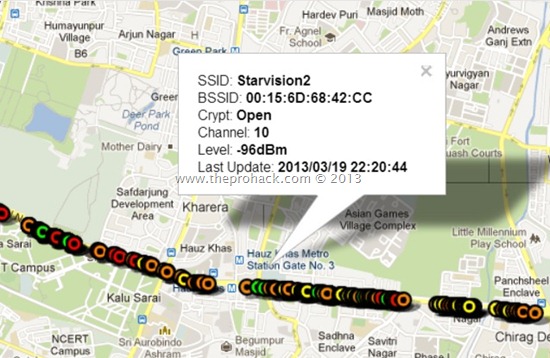
Wardriving at Delhi Updated –The OPEN, WEP & WPA faces of Delhi

I got an overwhelming response to my Wardriving at Delhi project and have got a lot of emails regarding the same. I am so thrilled that so many people want to contribute to the project. Inspired by your feedback, I am here by producing here an update to my mapping project. This time I went Via Saket to Gurgaon and as usual I got a lot of access points which were OPEN with no security, WEP secured vulnerable access points & WPA/WPA PSK2 secured points.
 Wardriving at Delhi Updated - The OPEN,WEP and WPA
As usual, I used -
The target is to make a map of Delhi with all the access points  to analyse in layman terms -
  1. The security awareness of people and organizations
  2. The devices they are using
  3. The security mechanisms they are using.
  4. Wifi range analysis of individual device.
Well, in all you can find the data from below links -
If you are interested in contributing to the data, please contact me at admin<at>theprohack.com . You can also read how to Hack Wifi using Backtrack , How to detect if someone is using your WiFi  or how to detect WiFi hotspots . If you are having an Android, you can also read about how to use your Android for Wardriving.

Happy Wardriving.